Throughout my blog I have demonstrated what is important aspects of Language Arts to have in my classroom.I created a web to show how my beliefs and understandings have changed through out this semester. This link will take you to a web of my final beliefs and understanding .
When looking at the web the green are my initial beliefs and the pink is my final beliefs.

Setting up a Classroom Library

I think it is important for a teacher to have a variety of books in his/her classroom library because students need to be expose to all different kinds of books. The library should nonfiction, fiction, biographies, autobiographies,magazines, and poetry. It is important for students to be expose to all different kind of books because they will encounter different types of literature in their life time. A teacher should organize the classroom room library by section: Fiction, nonfiction, poetry. Within these sections the books should be organized by topics and all the books should be labeled what level the books. By organizing books students will have an easier time finding books on their level and their interest.
Ways to be an Effective Teacher
The Routman article (2003) taught me ways to be an effective teacher:
• Their students spend about 50 percent of the day reading and writing;in less effective classrooms, students may spend only 10 percent of the day reading and lots of time on "stuff
• Their students spend enormous amounts of time reading easy text that they can successfully read with fluency.
• Well-crafted, explicit demonstrations and explanations during all aspects of reading instruction-whole class, small group, individual are standard practice.
• They promote purposeful, open-ended talk( teacher to student and student to student) that is " more conversational than interrogational".
• The task assign are meaningful and challenging, involve some student choice, and often several content areas ( reading, writing and social studies, for example
• They evaluate student work more on improvement and effort than on achievement. They prepare rubrics students can use to evaluate their own work. They spend little time preparing their students to take standardized tests. (Routman, R (2003) Reading Essential. Portsmouth, NH: Heinemann, p. 185-200.)
I found these ways to be very helpful to help set up my future classroom. These tips will help me develop a strong classroom schedule and environment.
Assessing Students

It is important for teachers to use three different kinds of assessment which include traditional, portfolio, and performance because " all three provide valuable data to assess the whole child" ( Burke pp. 4 2006). Traditional assessment allow teachers to see the knowledge of content and skills of a student. Portfolio assessment help show the student's progress over time, allow students to assess and set new goals for themselves. Performance assessment allow students to apply their knowledge of the content and skills to a real task. According to Burke " if a teacher uses all three measurements in appropriate proportions for the grade level, however, a true portrait of student as learner emerges" ( Burke pp. 4 2006).
I think it is important for teachers to modify their lessons based on formative assessment. Formative assessment is ongoing observations and feedback in the classroom and outside the classroom. According to Burke (2006) "since formative assessment are ongoing they provide continuous feedback about the students' strengths and weaknesses. The teacher uses observation and feedback to modify the content, process, and product and adjust the pace for all or some of the students, depending upon their needs" (4). The teacher needs to notice the strengths and weakness bases on these observations. I believe that teacher should take anecdotal notes on each student. By taking anecdotal notes on each student you have a better understanding of each student performances, weaknesses, strengths and a teacher can modify to the students needs.
Journal Writing


I would allow time for free writing in a student’s individual journal. By giving students the opportunity to write freely in their journal, students can be creative and express their thoughts. Students would be allow to use pictures and any style of writing that they want in their journals. I would look for writing strengths in my students. I think it is important for students to be able to express their thoughts freely. Teachers can find out a lot of information about their students from their journal.
Explicit Writer's workshop

These are some expectations that I would explicitly go over in a mini lesson and then I would display them in my classroom.
I will use Writer’s Workshops. This is a great opportunity for students to write creatively and receive immediate feedback on content, style and grammar. I will start by explaining how the students should behave. I would clearly explain the objective of the session. Students must maintain a low level of noise when writing; learn how to properly how to hold a pencil, and where to write on the paper. I will focus my mini-lesson on a specific topic, such as using descriptive words. A mini-lesson is an ideal time to teach grammar concepts. Students need to apply these skills to their writing assignment. After the mini-lesson, students would practice using descriptive words and the grammar rules. As students are writing, I would hold individual conferences with them. I think conferencing is an important time during the workshop, as I will have the opportunity to see the student’s thinking. While I will give them feedback, I will not over emphasize grammar or spelling issues during these private sessions. It is important to let students be creative. Students will have a chance to experience different forms of writing. I will take notes during the conferences to monitor progress. To conclude Writer’s workshop, I would make the class come together for Share time. During share time I would emphasize the skill or strategy and how to use it in their future work.
Guided Reading Groups

I will setup Guided Reading Groups. I will evaluate students’ reading levels at the beginning of the year by getting a record of a child’s oral reading performance . A running record will help me understand what the students are struggling with. According to Clay(2000) " running records capture what the readers said and did while reading the books or texts. Having taken the record teachers can review what happened immediately, leading to a teaching decision on the spot, or at later time as they plan for next lessons" (Running Record for the Classroom Today pp. 4). Clay describes "one use of Running Record is a check on whether students are working on material of appropriate difficulty, neither too difficult nor too easy, but offering a suitable level of challenged to the learner"(Running Record for the Classroom Today pp. 4). This allows the teacher to see the child's weaknesses and strengths in reading. I will choose the leveled based on the student running record performance. The teacher can use the running I will divide the class into “same level” reading groups. Each group will have a chance to read together and to discuss the book with one other. I will meet with the different leveled groups in order to check students’ progress. Goldberg & Serravallo (2007) state "I find it to be very effective to use conferring to individualize a reader’s needs based on skill and strategy work that a particular level demands. Sometimes,I
preteach some content to help a student with prior knowledge in a new book" ( Goldberg, G. & J Serrvallo Conferring with Readers Supporting Each Student’s Growth and Independence pp.88-100). During the conference the teacher needs to realize what the student understand to do when reading and what the child needs help with. According Goldberg & Serravallo (2007) " My goal in this conference is to help support a student with one of the demands of this new level.I teach the student one strategy to help with
this new skill.Here is one example of how a conference like that might go" (pp. 95). The ultimate goal is guided reading groups is for the student to move up to the next level of reading materials. It is important for the teacher to provide guidance on how each student moves up to the reading level.
While meeting with reading groups, I will set up literacy centers. In these literacy centers, I would create activities to practice literacy concepts. At the centers, I will incorporate technology including listening to sound of words on tape and posting on the class blog. These centers give students the chance to explore literacy concepts in a manner other than teacher-directed instruction. Also, the centers are a great way to bring in different learning styles because at some station you might be listening to words, other stations might be drawing a picture about the book you are reading. The station ideas are endless and the students can be part a of creating the stations as well.
Independent Reading

Teachers need allow students to choose books based on the student interest and reading level. Students need to choose different types of literature. Sibbererson and Szymuiak (2003) explain " the key is placing value on all genres and types of reading materials so that students experience the variety they will encounter outside of school(63). I think it is very important for teachers to stress the importance of choosing things that children are interested in reading other than novels. This is important because students are not going to be reading novels all their life they may have to read articles, annual reports etc. This allows students to become more familiar with text earlier in their lives so they are prepared for the future. Also, it allows students to explore different kind of writing styles and they might not get bored reading different types of reading material if they are interested in it. During Independent reading the teacher should go around the classroom and observe the students. There are many ways to assess students during independent reading. Sibberson and Szymuiak (2003) state things teachers can do
- Analyze reading logs to learn about students' reading patterns. We also encourage students to reflect on their logs to discover what they can learn about themselves as readers
- Take the status of the class each day to become familiar with what students are doing and decide how and when to support them in their reading
- Learn from the student's reflection about their own reading and the reading goals they identify for themselves
- Listen to conversations and observe students during independent reading time(67)
Read Aloud and Read Aloud notebooks
Some examples of read aloud books


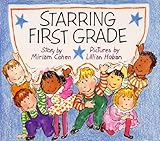

A teacher should have an Interactive read aloud. A read aloud allows the teacher to model how to read a book and the students have the opportunity to concentrate on understanding the book. In a read aloud the teacher should allow students to talk about the book. A read aloud is important for students to understand how they should read and what they should doing when they read the story. Also, read aloud model conversation teachers want their students to have during guided reading groups. Read aloud provide the students the opportunity to concentrate on strategies for comprehension. This is great way for students to learn in a different way because the students are watching the teacher and listening to the teacher read. According to Sibberson & Szymusicak (2003) " the read-aloud notebook is a safe place for readers to use writing as means to think more deeply about the text. We don't give much direction. We simply ask students to write down whatever they are think. This allows us to see the ways students naturally respond to text. It helps us to see who is risk taker and who is worried about "getting it right"(Sibberson & Szymusicak, 2003, pp. 37). The read aloud notebooks allows the students the freedom to respond the answer. The teacher can see what the child understands and what the child struggles with. We can notice the progress the student has made throughout the year by comparing read aloud entries.
Setting up Reader's Workshop with my students in mind
The other core subject and life-long skill is reading. It is important for students to have confidence in their reading abilities. I think it is important for teachers to point out their strategies on how they read through a story. For example, when I was younger I looked at pictures in order to understand to the meaning of the text. Harvey and Goudvis (2007) preaches, “ we believe we must teach our students to think when they read so they can access information and learn, understand, and remember what they read”(15). I think it is important to stress that a student understand rather than how count how many books you read. Reading workshops are a great opportunity to teach students reading strategies. The teacher needs to explicitly explain how a student must act during reader’s workshop and what tasks we will work on. Students must maintain a quiet environment while reading. Concentration and focus are critical. During a mini-lesson, I will review reading strategies for better comprehension. After the mini-lesson, I will give students an opportunity to practice reading strategies during independent reading during which I would conference with the students. During the conferences, I will ask students questions. I will ask them to read several pages in order to evaluate their reading proficiency. I will take notes during the conferences to gauge progress. The conference also provides the time for me to individually teach students the strategy. At this time I cause see the progress of the student and see how the child is understanding the strategy. I will also be able to noticed how the student is applying the strategy in the process. After, my students had a chance to work on their strategy; I would make the class come together for share time. During share time I would re-emphasis the strategy and share some positive ideas I observed. I think it is important for the teacher to point out what students are doing well so are still motivated to work. I think it is important for students to apply their reading strategies in all subjects. I think it is important for students to understand which strategy works best for them.
This video shows an example of reader's workshop session. This reader's workshop session has a mini-lesson, practice opportunity, and share time.
Phonics vs Whole Language

This is a student's worksheet practicing Phonics.

I believe in teaching Phonics to children rather than using a whole language. I think it is important for children to learn how the letter sounds rather than just repeating the word that their teacher tells them. When using the phonics approach students are learning how each letter sounds and figuring out the word on their own. Also, they can apply their knowledge of phonics in future text. In my field experience, my teacher using Phonics in her classroom and the children sound out all the words. I learned to read by using a Whole Language approach and I do not think that I am a good reader because of it. My teacher just told us the word and we memorize it. I still have the feel of coming to a long word and not being able to pronounce it. I want my students to be able to pronounce any word they come across to in their text because they understand the sound that the letter makes. In my E341 class I had a chance to explore a phonics website that I would use in my classroom for my students to practice phonics. The website is www.starfall.com. Starfall is very fun to play on and the children would love to learn phonics on it. I will use Phonics in my future classroom because I think children should be able to uncover words on their own. My students would be encouraged to read the words exactly as they appear on the page. According to Wren (2009), " Children are explicity taught "rules" about the way words are written and spelled-sound relationships. After a teach provides an explicit lesson in a particular Phonics rule, the child is presented with a passage of text that contains many words consistent the rule( called decodable text); this provides the child with the opportunity to apply each Phonics rule on a variety of words in the context of a passage"(website reference) This way students can apply the rules to any word that they encounter.
Strengths based approach

( Each student has a different strength and talent. Students learn in different ways and use different strengths in order to learn.)
What is Strength based approach? Strength based approach focuses on the individual needs and strengths rather than the content. Every child learns differently. It is important for teacher to get to know their students and find out their strengths and weaknesses and what strategies are helpful in the classroom. It is important for the teacher to teach lesson is variety of ways therefore she is reaching out to all students' learning styles. Students need to feel comfortable in their environment and be able to express their thoughts freely. Also, in my classroom I would give explicit instructions on how to do things therefore, all students know what to expect from me. Teachers need to understand their students talents and strengths. According to Anderson(2005) "There is a direct connection between your talents and your achievements.Your talents empower you. They enable you to move to higher levels of excellence and fulfill your potential.That is why it is so important for you to know,understand,and value your talents.A talent represents a capacity to do something. In fact, when you are able to do something very well,you can be sure that at least one of your talents is involved. Just think about all the things you do very well.You’ll realize that you have many talents! Not only do talents help you do something well once; they help you do it well over and over" (Anderson, E. (2005)Strengths-based educating: a concrete way to bring out the best in students—and yourself. Retrieved on February 12, 2008). (resource) This website made me realize that I need to focus on the talents of my students. As a teacher I need to have my students discover their talents and turn them into strengths. Anderson (2005) explains "as they do so, their self-identities and personal values should become clearer, and as a result,they will likely become more confident, optimistic, and focused. As they achieve through their strengths,they will likely aspire to—and achieve—higher goals"(Anderson, E. (2005)Strengths-based educating: a concrete way to bring out the best in students—and yourself. Retrieved on February 12, 2008). (resource)
My background of being a reader and a writer
When I begin to think about reading and writing in my school experience I begin to cringe. In my school experiences, I always just go by, but never fully developed into a strong reader or writer. I am trying to become more competent by reading more books. Since I started college, I began writing more essays and engaging in different literacy projects all of which helped me become a more confident writer. When I attended school, teachers forced me to read books that did not catch my attention. I read books over and over again to comprehend them. When I read a book aloud, I understand it more clearly. Also, when my teachers let me draw pictures of scenes from a book, I understood the book more clearly. My weak reading skills have negatively affected me as writer. When I was younger, I had trouble communicating my thoughts and opinions on a paper. I often left out words and made grammatical mistakes. From my experience as a child I have learned concepts to develop my beliefs and understanding of teaching literacy. Throughout the semester I hope to gain more confidence in my reading and writing ability. I hope this can help me create a more developed belief and understanding about teaching literacy. I created a web to show my beliefs and understandings at this moment. I want to see if my thoughts change throughout the semester. This link will take you to a web of my initials beliefs and understanding .
Subscribe to:
Posts (Atom)